Industry Insights
How can online travel agencies capture more group bookings before they fall apart?
Maytes Editorial·Jun 04, 2026·8 min read
Industry Insights
Online travel agencies lose group bookings because one traveller is usually expected to front the full cost for the group before collecting money from everyone else. This creates payment friction, delays decision-making, and increases abandonment at checkout.
Split with Maytes helps reduce this friction by allowing a booking to be secured immediately while each traveller pays their share separately. For OTAs, this means more completed bookings, fewer abandoned carts, and a smoother experience for group travellers.
If you own conversion rates for an OTA, you already know the pattern. A group of four decides to book a trip. One person opens the site, fills the cart, gets to payment, and stalls. The group chat starts. Two days later, the seat inventory is gone, and so is the booking.
This is the group deposit problem, and it is one of the most unrecognised conversion drains in travel right now.
Most travel checkouts are built for one buyer.
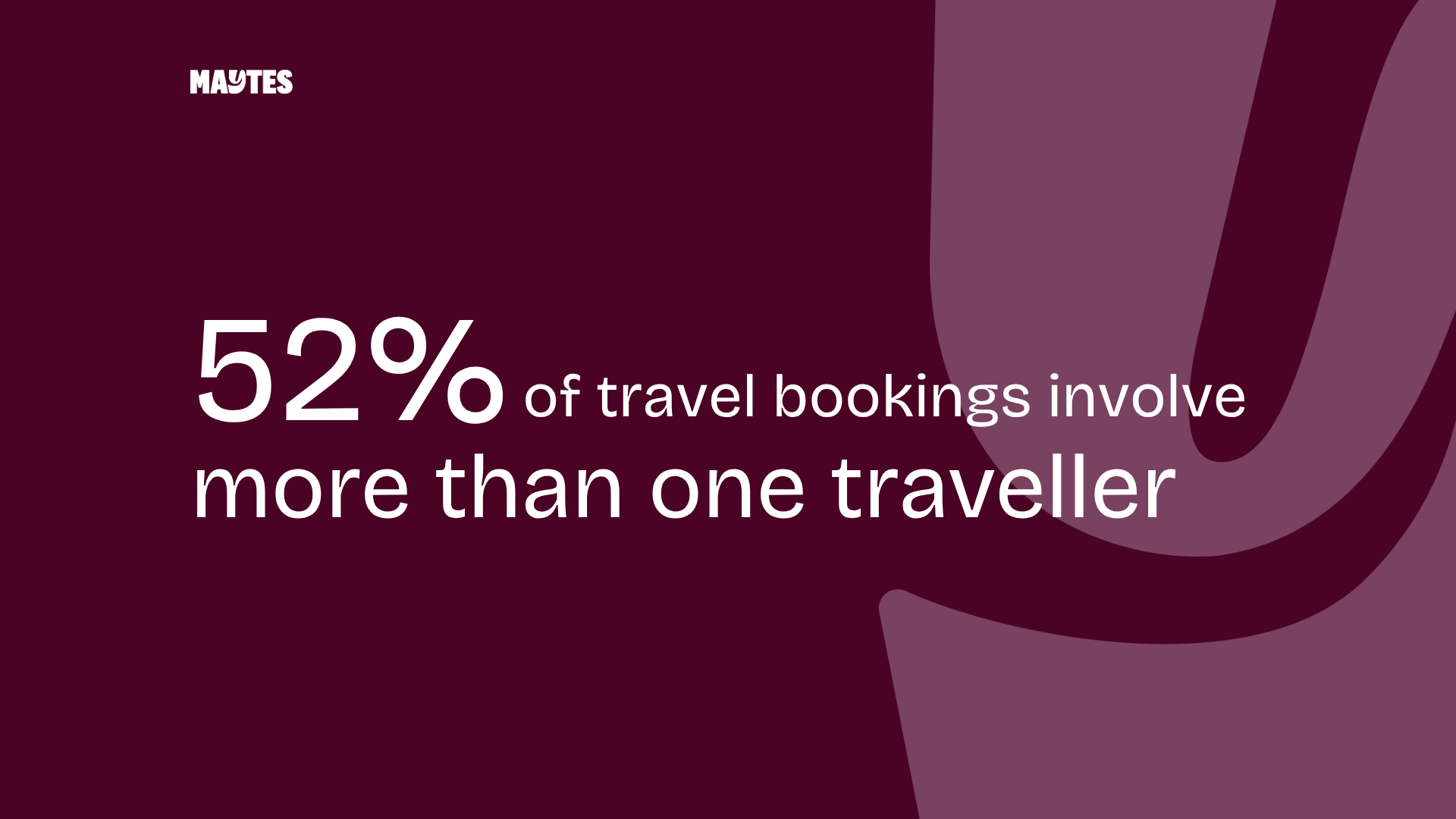
However, according to our November 2025 consumer survey of 300 organisers who bought two or more tickets online in the past year, 52% of their online ticket and travel purchases were for groups.
Group size sits at 2 to 4 in 89% of cases. For a $5,000 tour deposit split four ways, that is one person putting $5,000 on a card while everyone else promises, "I'll transfer you tonight."
31% of group ticket buyers have missed out on something they wanted because the group took too long to confirm.
In travel, that "too long" is measured in minutes. Flight prices move. Cabins sell out. Tour seats disappear. You do not lose these bookings at the search stage. You lose them at the payment stage.
Most travel purchases are group decisions. But checkout treats them like individual purchases. One person becomes the organiser. They choose the dates, coordinate the group, collect responses, front the money, chase repayments, and absorb the risk if somebody changes their mind.
The challenge is not affordability.
The challenge is coordination.
For many travel businesses, this friction is invisible because it happens outside the booking flow itself.
Analytics platforms show abandonment.
They do not show the group chat that followed.
Split with Maytes is an alternative payment method offered alongside your other payment methods that allows one person to secure the booking while the rest of the group pays their share within 48 hours.
The organiser selects "Split with Maytes" at checkout. They pay their share, and a hold is placed on their card for their mates. Each friend receives a secure PayLink and pays with Apple Pay, Google Pay, or card. No app download. No account creation.
The OTA is paid in full, regardless of when or if the mates pay their share. The booking is confirmed at the moment of group intent, not days later.
32% of people told us they would organise larger groups more often if this option existed at checkout. That represents both basket-size uplift and behavioural change. Groups that might have booked for two people can confidently book for four.
Three segments typically see the clearest benefit:
Flight, hotel, and package booking platforms where one organiser often books on behalf of multiple travellers.
Adventure travel brands and tour providers where groups book together, deposits are high and cancellation windows are tight.
Villas, holiday homes, group apartments, ski chalets, and other properties where the total booking value is high even when the individual cost per person feels reasonable.
If your data shows a meaningful share of multi-passenger or multi-room bookings, your checkout is likely losing conversions during the group-fronting stage. Compare abandonment rates against passenger count and booking size.
The relationship is often more significant than businesses expect.
If your checkout regularly handles multi-passenger bookings, group travel, or shared accommodation, it may be worth looking at how much demand is being lost at the payment stage.